
coaching leadership

Coaching Leadership: Elevating Teams for Success through Managerial Transformation!

In today’s dynamic workplace landscape, leadership paradigms have transcended conventional hierarchical structures. The concept of managers as coaches is swiftly gaining prominence as organizations increasingly acknowledge the profound impact of this leadership approach. In this blog, we will explore the remarkable potential of adopting a coaching style, unraveling its ability to reshape team dynamics, enhance communication, and foster collaboration, all of which culminate in the achievement of superior outcomes.

1. Managers as Coaches: Impact on Teams

The traditional role of a manager often involves directing and controlling team members. However, the shift towards a coaching model empowers managers to become facilitators of growth and development. When managers assume the role of coaches, they create an environment where team members are encouraged to take ownership of their work, set goals, and find solutions.

Example: Google’s “Project Oxygen”

An illuminating instance is Google’s groundbreaking study, dubbed “Project Oxygen,” which uncovered that the most impactful managers embrace a coaching stance. These managers make employee development a priority, engaging in consistent one-on-one dialogues. Through this, they nurture an atmosphere of perpetual feedback and advancement. This coaching-centered leadership style culminated in elevated employee satisfaction and notable enhancements in team performance.

2. Coaching Leadership: Building Trust and Collaboration
A coaching leadership style paves the way for open communication, trust-building, and enhanced collaboration among team members. When managers act as coaches, they actively listen to their team, acknowledge diverse perspectives, and create a safe space for sharing ideas and concerns.

Example: The Boeing Company

The Boeing Company serves as a notable illustration of the effective implementation of a coaching culture within its leadership. This initiative involved training managers to embrace coaching skills, resulting in a tangible enhancement of communication across the entire organization.
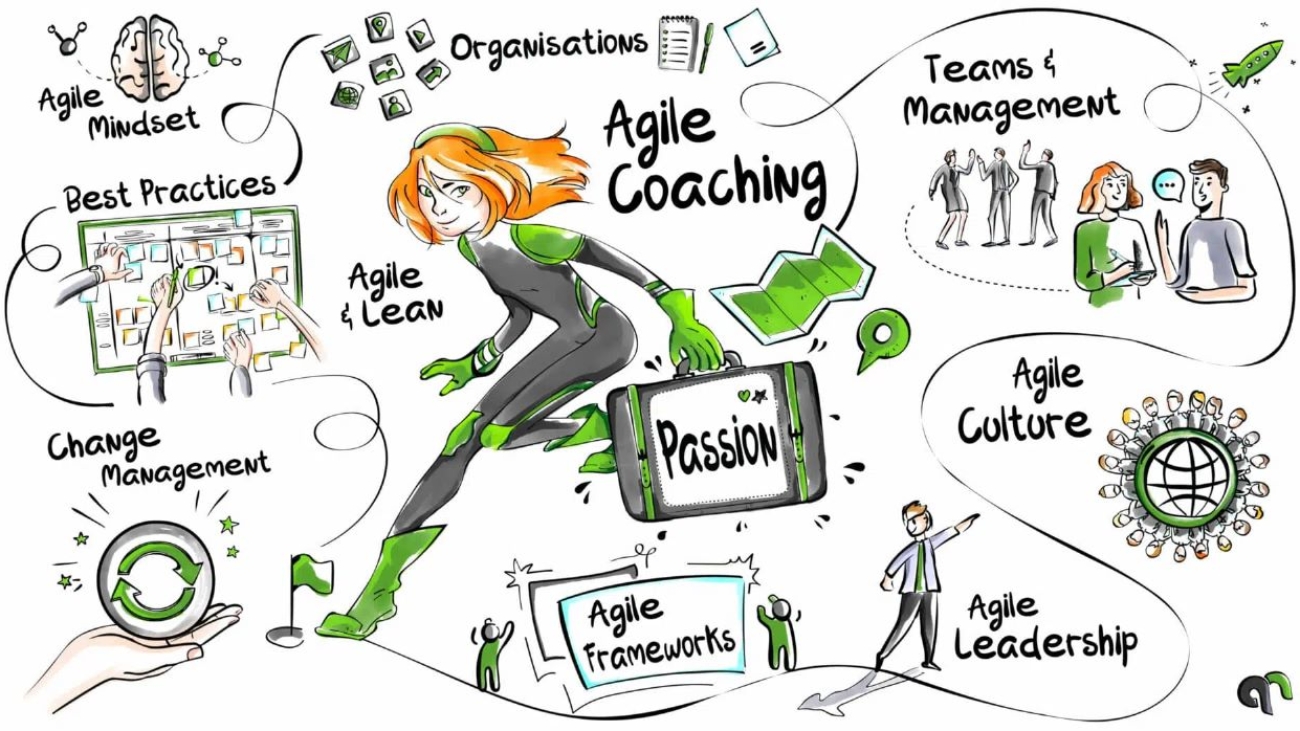
3. Agile Coaching in Managers-as-Coaches Context

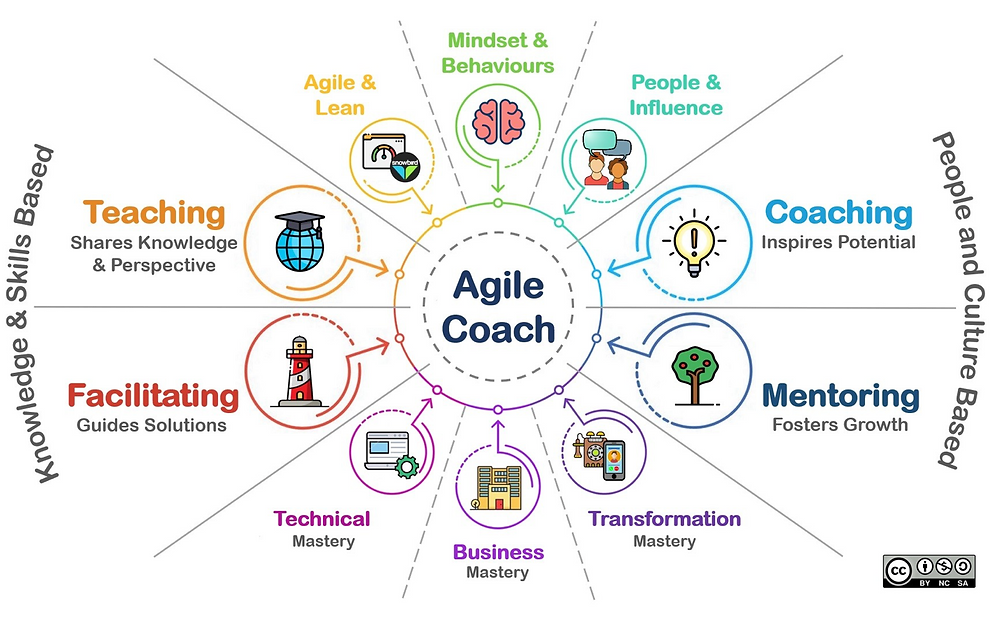
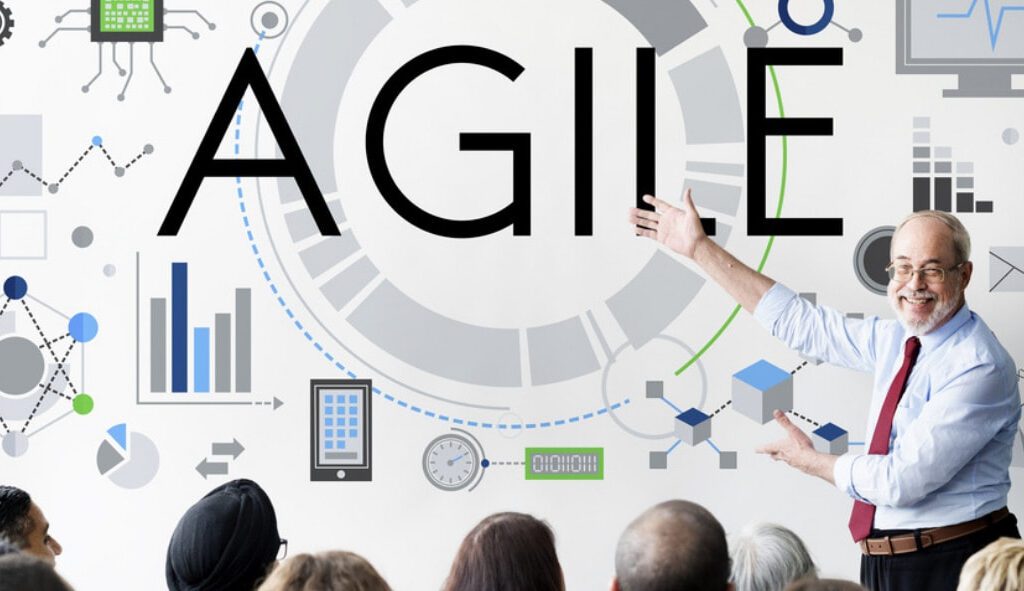
Agile Coaching entails skillfully leading teams and organizations in embracing and operationalizing Agile methodologies. These methodologies emphasize flexibility, collaboration, and a commitment to continuous improvement. Managers can augment their coaching approach, bolstering team achievements within ever-changing work landscapes by assimilating Agile coaching principles.

  • Continuous Improvement: Agile coaching’s focus on improvement complements coaching-oriented managers’ emphasis on growth.
  • Adaptability: Both Agile coaching and coaching leadership encourage adaptable approaches in dynamic settings.
  • Collaboration: Agile coaching’s teamwork emphasis aligns with managers’ fostering of collaboration.
  • Individual Development: Agile coaching’s personal growth focus complements managers’ coaching for employee development.
  • Problem-Solving: Both styles involve guiding teams in collaborative problem-solving.
  • Change Facilitation: Agile coaching helps manage change, aligning with managers’ support for adaptation.
  • Feedback Loop: Agile coaching’s feedback-driven approach aligns with managers’ iterative guidance.
  • Outcome-Driven: Both prioritize achieving results, enhancing team performance

4. Effective Coaching Strategies for Managers

a. Active Listening: Managers should actively listen to team members, demonstrating empathy and understanding. This practice fosters better relationships and helps managers identify areas where coaching is needed.

b. Asking Powerful Questions: Thoughtful questioning prompts self-reflection and critical thinking. Managers can ask open-ended questions that encourage team members to explore solutions on their own.

c. Providing Constructive Feedback: Feedback should be specific, timely, and focused on growth. Managers can use the “feedback sandwich” approach, highlighting strengths, and areas for improvement, and concluding with positive reinforcement.

Workplace Example: Adobe’s “Check-in” Approach revamped its performance review system with a coaching-oriented “check-in” model. Managers engage in regular check-ins with employees, focusing on development rather than mere evaluation.

A New Era of Leadership

Embracing the role of managers as coaches signals a shift towards a more people-centered and growth-oriented leadership approach. As managers cultivate an environment of open communication, trust, and collaboration, teams thrive and achieve better results. By implementing effective coaching strategies, organizations can harness the full potential of their workforce, resulting in increased innovation, productivity, and overall success.

Are you ready to transform your leadership style and drive exceptional results? Start by incorporating coaching strategies into your managerial approach. The journey to becoming a coaching leader begins today with Auxano Consulting


Feel free to connect with Linnet DaveAuxano’s Director and Executive coach on linnet@auxano-consulting.com or connect with her at +919820668179 for any queries on the subject and if you need to get a customized learning Intervention done for your organization.


Written by Vineeta, Image sources: http://www.ccl.org,https://blog.workana.com
agile coaching

Navigating Change: Embracing Flexibility for Effective Agile Leadership!

In today’s rapidly evolving business landscape, traditional leadership approaches are giving way to a more adaptive and responsive model known as agile leadership. As organizations navigate through uncertainties and disruptions, agile leadership stands out as a vital strategy for staying competitive and thriving in a changing world. This article delves into the significance of embracing flexibility in leadership, with workplace examples that make the concept relatable. Additionally, we explore the role of agile coaches in aiding leaders to embrace flexibility effectively.

Background

The world of business has undergone profound transformations, from technological advancements to market dynamics. In this dynamic landscape, rigid leadership styles that once served well are no longer sufficient. Embracing flexibility has emerged as a key attribute of successful leadership, particularly in the context of agility.

Embracing Flexibility: A Necessity in a Changing World

Agile leadership is characterized by its adaptability, responsiveness, and openness to change. Leaders who embody flexibility can swiftly adjust their strategies and approaches based on evolving circumstances. Take the example of a technology company that has been using the same product development process for years. When they recognized a shift in customer preferences towards more personalized solutions, the leadership swiftly adapted their approach to cater to these changing demands. This agility enabled them to capture new market segments and enhance customer satisfaction.

Flexibility is no longer a luxury but a critical requirement for leaders to succeed in navigating the complexities of a changing world, it helps with:

  • Adaptability in Uncertainty: Rapid changes demand leaders who can pivot their strategies to stay competitive.
  • Dynamic Customer Needs: Flexibility allows leaders to tailor products and services to evolving customer preferences.
  • Navigating Technological Advancements: Embracing new technologies ensures organizations remain innovative and efficient.
  • Employee Engagement and Well-being: Flexible work practices boost morale and attract top talent.
  • Fostering Innovation: Flexible leaders create environments where creativity and risk-taking thrive.
  • Resilience in Disruption: Adaptable strategies minimize the impact of unexpected disruptions.
  • Inclusive and Collaborative Cultures: Flexible leaders value diverse perspectives, leading to better decisions.

Workplace Examples of Embracing Flexibility

Remote Work Transition: The COVID-19 pandemic forced many organizations to adopt remote work models overnight. Companies with leaders who embraced flexibility smoothly transitioned, utilizing technology to maintain productivity and employee engagement. Flexible leaders focused on outcomes rather than micromanagement, allowing teams to work in ways that suited their individual situations.

Inclusive Decision-Making: Flexible leaders encourage diverse perspectives in decision-making. A manufacturing company, for instance, achieved remarkable cost savings by involving employees from various departments in the process of identifying operational inefficiencies. This inclusive approach not only improved their processes but also boosted employee morale.

Agile Project Management: A marketing agency faced a tight deadline for a client campaign. The leader, instead of adhering to a rigid project plan, empowered the team to make real-time decisions and adjust strategies as needed. This approach ensured the timely delivery of the project while fostering innovation and creativity.

The Contribution of Agile Coaches to Embracing Flexibility

Agile coaches play a pivotal role in guiding leaders and teams toward adopting flexibility. They facilitate a shift in mindset and provide the tools and techniques needed to navigate uncertainties effectively. An agile coach helps leaders recognize the value of continuous learning and experimentation. They encourage leaders to create an environment where failure is seen as an opportunity for growth rather than a setback.

Agile coaches also assist in promoting open communication and collaboration. In a rapidly changing environment, information flows need to be seamless for quick decision-making. Agile coaches help leaders establish practices that facilitate transparent communication across teams and departments.

Conclusion

Embracing flexibility is no longer a choice; it’s a necessity for leaders in a changing world. Agile leadership, characterized by its adaptability and responsiveness, is the key to thriving in today’s business landscape. By examining workplace examples, it’s evident that leaders who embrace flexibility effectively drive innovation, inclusivity, and improved decision-making.

The role of agile coaches in this journey cannot be overstated. They serve as guides, helping leaders transition towards agile practices and fostering a culture of adaptability. As businesses continue to face challenges and opportunities, agile leadership will remain an essential driver of success, ensuring organizations remain resilient and future-ready.

In conclusion, embracing flexibility isn’t just a leadership approach; it’s a transformative mindset that positions leaders and organizations to seize opportunities and navigate uncertainties effectively.

Ready to lead with agility in a changing world? Discover how embracing flexibility and working with agile coaches can transform your leadership approach. Contact Auxano Consulting today.


Feel free to connect with Linnet DaveAuxano’s Director and Executive coach on linnet@auxano-consulting.com or connect with her at +919820668179 for any queries on the subject and if you need to get a customized learning Intervention done for your organization.


Written by Vineeta, Image sources: http://www.qualityminds.com; http://www.sabine-hahn.com; http://www.organimi.com

leadership4

Key Leadership Behaviors for Building Loyalty & Engagement in the Workplace!

In the fast-paced and competitive world of business, effective leadership plays a pivotal role in driving employee loyalty and engagement. A strong leadership team not only propels individual and team success but also contributes significantly to achieving organizational goals and sustainable growth. As the HR landscape continues to evolve, organizations are realizing the importance of investing in leadership development and cultivating specific behaviors that foster loyalty and engagement among their workforces. In this blog, we will delve into the top leadership behaviors that have been proven to create a positive work environment and inspire employees to perform at their best.

The Impact of Effective Leadership:

Leadership is the bedrock of a thriving organization. A capable leader has the power to motivate, inspire, and empower employees to perform at their highest potential. When employees are led by effective leaders, they feel valued, supported, and engaged in their work. This sense of connection with their leaders and the organization as a whole drive a deeper sense of loyalty, commitment, and dedication to the company’s mission and vision.

Investing in Leadership Development:

Recognizing the critical role of leadership in fostering loyalty and engagement, forward-thinking organizations are actively investing in leadership development programs. These programs aim to identify and nurture individuals with leadership potential, equipping them with the skills and competencies necessary to lead teams effectively. By cultivating a strong leadership pipeline, organizations ensure a continuous supply of capable leaders who can drive employee engagement and foster a positive work culture.

Top Leadership Behaviors for Loyalty and Engagement

1.Transparent Communication

Transparent communication is a cornerstone of strong leadership that fosters trust and loyalty among employees. When leaders communicate openly and honestly, they create an atmosphere of transparency and authenticity, where employees feel valued and included. Regularly sharing information about the organization’s vision, goals, challenges, and achievements enables employees to understand their role in the bigger picture, leading to increased engagement and commitment to the company’s success.

2. Empowerment and Autonomy

Leaders who empower their team members and grant them a sense of autonomy foster a culture of ownership and accountability. Employees who feel empowered are more likely to take initiative, showcase creativity, and actively contribute to the organization’s growth. When leaders delegate responsibilities and provide the necessary support and resources, employees feel valued and motivated to achieve their full potential.

3. Recognition and Appreciation

Recognition and appreciation are powerful drivers of employee engagement. A leader who acknowledges and celebrates employees’ efforts and accomplishments creates a positive and supportive work environment. Whether it’s a simple thank-you note, public recognition, or rewards and incentives, genuine appreciation makes employees feel valued and motivated to continue delivering exceptional results.

4. Supportive Mentorship

Effective leaders act as mentors, guiding and nurturing the growth of their team members. A supportive mentor provides constructive feedback, identifies areas for improvement, and helps employees develop their skills and talents. Mentorship programs not only enhance individual performance but also strengthen the bond between leaders and their team, fostering a culture of continuous learning and development.

5. Emotional Intelligence

Leaders with high emotional intelligence can empathize with their employees’ feelings and perspectives. They actively listen to their concerns, provide emotional support, and demonstrate understanding and compassion. By fostering a sense of belonging and psychological safety, emotionally intelligent leaders create an environment where employees feel comfortable expressing themselves and contributing their best work.

Conclusion:

The power of top leadership behaviors in driving employee loyalty and engagement cannot be overlooked. Transparent communication, empowering and delegating, leading by example, recognizing efforts, and providing growth opportunities are instrumental in creating a positive work environment. When leaders prioritize these behaviors, they lay the foundation for a motivated, committed, and engaged workforce, leading to greater productivity and success for the entire organization.

So, what are your thoughts? Which leadership behaviors do you believe drive loyalty and engagement among employees? We invite you to share your insights and experiences in the comments below. Together, let’s continue to explore the transformative impact of effective leadership in the modern workplace.

——————————————————————————————————————–

Feel free to connect with Linnet Dave, Auxano’s Director and Executive coach on linnet@auxano-consulting.com or connect with her at +919820668179 for any queries on the subject and if you need to get a customized learning Intervention done for your organization.


Written by Vineeta, Image Credit-FreePik.

(Written by Vinita Gupta; Image Credit-FreePik)

Thriving Amidst Ineffective Managers: Strategies for Workplace Productivity!

In every organization, effective management plays a vital role in creating a productive work environment. However, when managers are ineffective, they can impede employee performance, dampen morale, and hinder overall success. Recognizing and addressing such managers is crucial for both individual growth and the organization as a whole. In this blog post, we will delve into the roles and responsibilities of managers, explore methods to identify ineffective managers, examine the impact they can have on the workforce, and provide actionable strategies to effectively navigate and deal with them.

The Role of a Manager
Managers hold a critical position within organizations as they bear the responsibility of guiding their teams toward achieving shared goals and objectives.

Their roles encompass various key responsibilities, each contributing to the success of the team and the organization as a whole:

a) Setting clear expectations: Effective managers excel in communicating goals, defining expectations, and ensuring their team members have a comprehensive understanding of their roles and responsibilities. By establishing clarity, managers provide a solid foundation for success and alignment within the team.

b) Providing guidance and support: Effective managers offer guidance, support, and mentorship to their team members. They offer guidance, support, and resources to help individuals navigate challenges and achieve their full potential. By fostering a collaborative and supportive environment, managers empower their teams to perform at their best.

c) Encouraging growth and development: Managers should facilitate the growth and development of their employees by identifying training opportunities, providing constructive feedback, and recognizing achievements. By investing in the growth of their team members, managers contribute to a culture of continuous learning and professional advancement.

Ways to Identify Ineffective Managers

Identifying ineffective managers is of utmost importance when it comes to addressing performance issues and fostering a positive work environment. Here are some common signs that may indicate ineffective management:

a) Poor communication skills: Ineffective managers often struggle with clear communication, leading to misunderstandings and a lack of direction within their teams.

b) Lack of accountability: Ineffective managers may not take responsibility for their own actions or provide adequate support and guidance to their team members.

c) Micromanagement tendencies: Managers who excessively micromanage their employees can stifle creativity, undermine trust, and impede productivity.

d) Low employee morale: A disengaged and demotivated workforce can be a telltale sign of ineffective management.

The Effects of Ineffective Managers on the Workforce

Ineffective managers can have significant negative effects on the workforce and the organization as a whole. Some of the potential consequences include:

a) Decreased productivity: Poor management practices can lead to confusion, inefficiency, and a lack of clear direction, resulting in decreased productivity among employees.

b) High turnover rates: Inadequate management can contribute to low employee morale and dissatisfaction, leading to increased turnover rates and the loss of talented individuals.

c) Impact on employee well-being: Ineffective managers can create a toxic work environment, causing stress, burnout, and decreased job satisfaction among employees.

Strategies to Deal with Ineffective Managers

Dealing with ineffective managers requires a proactive approach and open communication. Consider the following strategies:

a) Document and address concerns: Keep a record of specific incidents or behaviors that illustrate the manager’s ineffectiveness. When appropriate, address these concerns with higher-level management or human resources.

b) Communicate openly: Schedule a meeting with the manager to express concerns and provide specific examples of problematic behavior. Clearly communicate the impact it has on individual and team performance.

c) Seek feedback from colleagues: Talk to other team members to gather insights and perspectives on the manager’s performance. This can help validate concerns and provide a broader perspective on the issue.

d) Seek mentorship and professional development opportunities: Take advantage of internal or external resources that offer mentorship, coaching, or leadership development programs. These can equip employees with the skills and knowledge to navigate challenges effectively.

e) Offer solutions and support: Provide suggestions for improvement and offer assistance in areas where the manager may be struggling. This approach demonstrates a willingness to work collaboratively and find solutions together.

Conclusion:

Ineffective managers can hinder organizational success and impact employee well-being. By understanding the roles and responsibilities of managers, identifying signs of ineffective management, recognizing the effects on the workforce, and implementing strategies to address these issues, organizations can foster a more productive and positive work environment. Remember, open communication, documentation, and a proactive approach are key to mitigating the impact of ineffective managers and promoting a culture of success. Auxano Consulting can provide valuable insights, tailored solutions, and actionable strategies to transform your management practices and create a thriving work environment. Together, let’s pave the way to a brighter and more successful future.

—————————————————————————————————————–

Feel free to connect with Linnet Dave, Auxano’s Director and Executive coach on linnet@auxano-consulting.com or connect with her at +919820668179 for any queries on the subject and if you need to get a customized learning Intervention done for your organization.


Written by Vineeta, Image Credit-FreePik.

Women With Courage & Women Who Encourage

Is state of the art ruling the roost at your workplace?

Are we anymore commuting to our workplace? No, we are Telecommuters instead

Having a face to face communication with your co-workers has become a thing of the past since almost all of us are communicating through the small digital rectangles which feel like nothing less than confinements.  Are we anymore commuting to our workplace? No, we are Telecommuters instead. Workspaces these days are mostly occupied by Tech-savvy millennials. More people are preferring the WFH mode and an array of companies are introducing perpetual remote positions all across the globe such as Indeed, Slack, Zillow, and Github.

What should effective workplace automation look like?

Managers must have a smooth flow of communication with their teams, team leaders so that physical absence is not a bigger hindrance. The key areas to incorporate technology in the workspace must be fathomed to have enhanced productivity and satisfies a chunk of the workforce. Online interaction must have the 4 Cs – Culture, Connection, Compliance, and Clarification.

Aishwarya Kalakata from Flipkart believes that an output-based evaluation is preferred by both companies and leaders rather than a face-time-based judgment.

Quintessential tech habits to be developed by leaders :

Starting from document and data management, workplace decorum management also warrants some tech to keep track. To collaborate and communicate proficiently, leaders require tech gadgets for enhanced workspace coordination. Leaders should always think of technology before adopting tools.

A no-code development way of finding solutions is the key to empowering employees and mid-level leaders so that they can chalk out loopholes in the system and solve them on their own. Internal team dependency shall be alleviated by low code platforms and pressure on the IT team might be lessened. Goes without saying, tech has given the paradigm of cyber security a new dimension. In fact, AI and Augmented Reality have too taken much of the manual load off.

Now, leaders are equipped with additional insights and control over their workspace with the help of sentimental analysis (AI). Virtual assistants are of great help to team leaders and managers. Internet of things (IoT) is revolutionary to leverage the power of multiple work segments in a shorter frame of time.

Probable issues that leaders might face with Tech taking over :

“It is not a faith in technology, it is about putting faith in people”, – Steve Jobs ( Co-founder of Apple).

Leaders might feel like they are losing their agency over projects, or authority and power over their employees but the truth is aligning the company’s vision with the employees’ target is easier now with Tech tools. Leaders must strive to maintain a healthy tech culture at the workplace. Companies in this tech-driven era are investing more into an automated workflow, tech integration for remote and in-house employees too.

Leaders should always keep in mind that ‘ technology is the best when it brings and binds people together’.

Zeroing down : A gentle pat on the back as a token of appreciation still matters at the workspace when you are being praised by your boss or manager or team leader. We are missing out on the human touch and this isolation is grasping us affecting mental, emotional, spiritual, social, and physical health. Before the pandemic had hit the world per se, tech was seen as mere support in the workspace but now tech is the spine and tech is the pillar. Tech runs in the marrow of the workforce. Tim Bernes Lee, the inventor of the World Wide Web had said ” the web as I envisaged it we have not seen it yet. The future is still so much bigger than the past”. Afterall the new normal suggests that people are not only working from home but are working from almost anywhere and everywhere.

Are the 42-year-old afraid of the 24-year-old, growing ideas in wild profusion at workplace!!

Are the 42-year-old afraid of the 24-year-old, growing ideas in wild profusion at workplace!!

The pace at which this newer generation is working is commendable but older industry biggies are finding it tough to cope with the gen Z pace.

Digitization is the biggest and most potent wave that has ushered in at almost every work space across the globe. Well need of the trying times perhaps. The millennials are playing a salient role since this is a tech savvy bunch of candidates getting recruited for an array of domains. Gen Z is eliciting newer ideas in terms of networking, sales, communication, promotion and workplace innovation. The pace at which this newer generation is working is commendable but older industry biggies are finding it tough to cope with the gen Z pace. A New York Times headline proclaimed that;” The 37-Year-Olds Are Afraid of the 23-Year-Olds Who Work for Them,”; and we cannot deny the very fact as well. The pseudo moral panic inside any organization is real when newer candidates are entering the workforce.

Perks of incorporating the Gen Z into the umbrella of modern workforce:

We are not unaware of the fact that this newer generation at workforce is bringing in fresher perspectives which is changing the market speculation graph. Let us dig deep and explore a few brownie points that companies might earn if they focus on onboarding of fresh college graduates. The Gen Z is also having less obfuscated ideas of diversification, inclusivity, racial and cultural integrity and gender sensitization. In fact, the millennials who have freshly graduated during this pandemic would be more empathetic towards their co-workers and the customer base as well.

  • Superannuated ideas are kept at bay. Obsolete markets trends are detected well and are binned at the earliest.
  • Less investment has to be incurred on the companies on technical training since the Gen Z is already tech savvy.
  • A simple workplace appreciation boosts these young minds a lot at workplace. To boost their morale does not take much unlike the 45-year-old industry experts who are already saturated with accolades and are hard to please.
  • The chunk of Gen Z per se is extremely value driven and ambitious too. They not only work for the financial motivation but for getting value loaded promotion at workplace along with a thirst for knowledge.
  • Remote working is going to be easier with them since the Gen Z is already habituated with communicating through small rectangular digital boxes on screen.
  • Since geography does not matter in the professional domain anymore, millennials are best suited to work from home owing to their ease with digital communication and modern-day gadgets.

Issues that age old infrastructures might face while sharing the workspace with millennials:

Since the Gen Z is entering the workforce in these trying times which is not socially economically prosperous, their critical thinking skill is speedy enough which might conflict with the older ideas that kept thing under a certain pace. Retention of older values, morals, practices, ideologies often face contradiction when fresh candidates take over the company framework with their spontaneity. The older people at work are more inclined towards idealistic theory of market, consumer base and so on and so forth. But on the flip side the Gen Z has been on their toes to chalk out realistic ideas.

  • The older people at work at times get too bossy or authoritative but the Gen Z expects leaders and not bosses at work. Cordial, amicable professional leadership that is more about leading a team and less about instructing or commanding is what the Gen Z sphere of expectation consists of.
  • The demographic pyramid is looked through the prism of ‘isms’ by the older people at work but the fresh employees and recent college graduates look beyond the brackets of societal prejudices and moral stigmas too.
  • Gen Z is radically inclusive hence they strive to connect through multiple channels of truth and individuality.

The very basic difference and unease lies in the fact that the Gen Z avoids direct confrontations and they live their professional lives quite pragmatically; which is not quite lucid to stomach for the baby boomers at workplace.

Conclusion: The Gen Z at workplace always appreciates individuality keeping the spirit of team work intact and according to market and recruitment trend surveys, the millennials hate labels or being tagged; this helps them look forward into the future and avoids their career stagnation too. The Gen Z workforce is a product of mobility and they have lived in multiple realities. They are dialoguers and ‘communaholic’ people at work. The idealists at workspace find it pretty difficult to adjust since they are revolutionary and collectivist at heart. The search for undefined identity at workplace makes the Gen Z stand out and is a hard pill to swallow for many baby boomers in the professional arena. I really like things that are unisex! I think it’s absurd that stores and brands split everything into “male” and “female.” After all, fabric is genderless.—Female respondent, 22, Goiânia. These gender fluid perspectives too might cause unease to the older people in the industry.

collage-leadership-qualities

How have the dynamics of modern-day leadership swished past archaic bossy traits?

A leader can be a boss but a boss can never be a leader! Well, goes without saying that primordial corporate authoritative structure is fossilized now.

Teamwork and group contribution are appreciated at workplaces more than being bossy over a corporate group of candidates. Leadership traits have undergone a sea change in the past few years since the pandemic has hit the global corporate infrastructure. Archaic facets of leading a team are no more incorporated or appreciated in the workspace. Professional mindsets have been broadened with a progressive and sensible outlook towards employees. When empathy is the new marketing secret sauce, empathizing with the employees and the target customer base is the very first step taken. Personal circumstances are no more divorced from professional choices and that has compelled this post-pandemic world to internalize employee issues in a better way. Archaic one-way communication has become superannuated perhaps. A cordial give-and-take method of communication is always solicited in the professional arena. Let us dig deep into some of the changed traits of leadership especially after the pandemic-ravaged world.

Excavating an array of leadership traits that have surfaced in the professional domain especially after the covid scenario:

  • Baseless and irresponsible optimism is one of the archaic leadership traits that are no more entertained at workspaces.
  • A lucid and firm consistency of communication is much appreciated especially when we all have fathomed how inevitable death is.
  • Empower your team instead of simply assigning them professional project-based tasks.
  • Keep things uncomplicated. Team members are inclined to follow leaders who keep it simple. Overcomplicating instructions don’t contribute to proper execution.
  • Set your standards and involve the entire team. You should set high standards for your team. And try to get every member involved. This brings unity and teamwork into play.
  • A reality check is important. Many theory-based leadership books have become obsolete since social affairs and market speculations never have aligned with consumer base and employee satisfaction in a static manner. Leaders are supposed to be practical and must be able to swallow the bitter pill.
  • A team’s success is determined by the leader’s willingness to accept responsibility for failure.
  • The ability to maintain hybrid work culture is a necessity.
  • To be able to deal with teams working remotely is another quintessential facet for leaders in the post-pandemic work culture.
  • To be tech-savvy is another potent requirement to lead teams when the geography of the employee does not matter for companies. Most of the MNCs are recruiting on a permanent work-from-home basis.

Key insights into modern-day leadership:

Be a friend first and lead the team thereafter. Lead, support, and accept the mistakes of all the members equally. Team members ought to share, report to and communicate rather than simply getting projects approved by the leader or getting permissions granted. Since the pandemic has hit almost every corner of the earth, societal currents and market fluctuations have become very volatile. Leaders used to plan and prioritize beforehand but now, last moment decisions have to be made with clarity and utter precision in the head.

“While there’s no denying the complexity of managing through a crisis, leaders can find clarity by testing every decision against touchstones that define their culture.”- Nancy Brown, CEO, American Heart Association.

Come what may, leaders ought to own up to circumstances divorced from situations perhaps. Rather than playing a blame game in this trying time, the key lesson to remember in leadership is that a leader’s attitude usually rubs off on their team members. If management refuses to accept responsibility for errors, neither will their staff, and no one advances. However, when a leader fully accepts responsibility for an issue, their team members are eager to do the same. When a leader has a positive attitude in both good and bad times, everyone becomes more efficient and optimistic. To be efficient while the demand mounts, identifying priorities and taking action on them one at a time are much-warranted leadership traits especially in this post pandemics professional scenario worldwide. Sorting priorities out for the team member has to be the leader’s priority. “The best thing we can do as leaders right now is to put humanity above the almighty dollar” – Adam Zeitsiff, President & CEO, Gold’s Gym.

Conclusion: When the workplace ecosystem gets chaotic it not only fleshes out professional hazards but also springs from a sense of disorder that disbalances the client and business relationship. A dictatorship mirrored from bosses at the workplace runs against sensibilities. Leadership roles have become quite palpable to awareness and inclusivity these days. Leaders ought to make gender-sensitized decisions as well. Flexible and adaptable leaders are much appreciated. Humility is highly expected from modern-day leaders and if they are active listeners that is an add-on. More than physical well-being emotional and mental wellbeing of all the team members are to be taken care of by the leader. A good modern-day leader has to take responsibility for the team members’ professional -spiritual-social health as well. Crisis management is everything when it comes to leading a team through a pandemic. Personal lives have been going through a pell-mell but a good leader should retain professional decorum come what may.

article-leadership-social-loafing-2x

Effects of perceived Loafing…

The very perception that one or more members in a work group are contributing less than they could do is termed as perceived loafing

Especially in corporate and business organization models, the infrastructures require efficient internal communication and that is exactly why accessing and evaluating the group productivity is important. Not all members are working with equal dedication and efficiency in the team. To judge the contribution from each end and to enhance individual activity psychological investigations lead us to unravel and discuss perceived loafing. In order to fathom how people, behave in a group and how does their performance graph fluctuates when they are with the team and without them, perceived loafing is a concept that aids this process of monitoring.

Sole psychology behind perceived loafing

The very perception that one or more members in a work group are contributing less than they could do is termed as perceived loafing. To make an estimation of reduced team effort is perceived loafing. Perceived loafing definitely does not mean that team members at a work place are actually underperforming. The sole intention is to keep a track of the productivity cycle so that no member lags behind. This helps the team supervisors to keep backup plans to meet the team goals. To examine the perceptions of team members is important to fathom team satisfaction but these perceptions might not be accurate always.

Reaction of group members to perceived loafing:

Be it any domain of work or any team in any work sphere, the members almost always are likely to not be satisfied with perceived loafing. It is inversely proportional; perceived loafing is never positively related to satisfaction with members of a team. The moment inequity is perceived in the group that has a negative effect upon team members being satisfied. It is also said that perceived loafing might have a negative impact on the real contribution by team members. This might lead to lower performances. Group members find it discouraging that they are perceived of as weak hence, that affect adversely.

Topsy-turvy consequence of perceived loafing

Perceived loafing might boost team members to boost their performances as that might compel them to prove themselves. The negative perception of a reduced productivity might enhance the team members to work at par so that the estimated perception does not come true.

Major off shoot of perceived loafing:

Instead of concentrating on the perception of people, team members often work harder for fleshing out an impression that they want others to perceive of them. Impression management is the major consequence of perceived loafing. team members often engage in impression management for defensive or assertive reasons. Team members start working on the basis of their speculation of other’s thoughts. To mold other’s perception is the sole goal of impression management.

Sectors of a corporate that are palpable to impression management and largely under perceived loafing

An array of psychological researches has been conducted to study work performances, team effort, group productivity, individual contribution parameters and their graphs and this shows that there are some certain sectors that are directly related to perceived loafing and their consequences. Performance appraisal is one of them. This regular review of an employee’s job has a lot to do with impression management. The employee is almost always conscious of his/her presence, impact, contribution and conduct in the professional domain. Impression management is a psychological facet that deals with such appraisals for performances in the work place since employees are aware of their images at the work space. In this case employees are almost always inclined towards building an identity for themselves. Impression management helps team members groom themselves to become more attractive, important a figure at the work space.

Feedback seeking is another sector at the corporate arena that is tangible to impression management. evaluation of team performance and individual efforts are premised upon the composite report of feedback seeking. Supervisor – subordinate exchange quality and the influence tactics are also related to impression management among team members.

Selection interviews are largely tangible by impression management since that deals with assumptions, evaluation, perception and its interpretation as well.

The recent status of research in the field of perceived loafing and impression management:

Impression management being a major offshoot of perceived loafing warrants more and wide spread serious psychological investigation. This arena needs to be examined more since corporate work spaces are expanding with urbanization and globalization. Global work force requires more technical and psychological transparency. The corporate work spaces are becoming more organized and formal yet very less focus has been put on study of impression management among employees be it long term employment or freshers.

Perceived loafing also results to defensive impression management

This mostly indicates that group members are not performing well. A certain sort of stubbornness is inculcated in the team members that hinders them from working with their full potential. They cannot digest the very fact that their efforts are underestimated and the perception of others is not going in their favor.

Conclusion: The satisfaction with group members is negatively corelated with defensive impression management and with perceived loafing too. The entire arena of perceived loafing is all about psychology and analysis of team work. To judge individual activity and trace productivity simply based on assumptions is anything but a piece of cake. But human intuition cannot be taken for granted especially in team work and larger global work forces.

Is employee training an expenditure or investment

Is employee training an expenditure or investment?

“Every enterprise is a learning and teaching institution. Training and development must be built into it on all levels, training and development that never stop.” – Peter Drucker

Extended periods of employee training and rigorous curriculum prepared to keep the employees aware of the workspace situation is one of the most common yet hectic procedures that any organization has to go through. But goes without saying, training the employees after their successful onboarding has to be one of the most significant steps taken from the company’s end since this is all about building work rapport and gel well with the candidates so that they feel at ease; they get to know the workspace better and the company to gets to deal with the nitty-gritty of the candidate profile, their communication skills, observational patterns, cognition level and social cues are drawn up accordingly. To get rid of the formal professional tension at the workplace, a time window of a few months is dedicated to bringing the candidates to a disciplined training module for which they are getting paid by the authority. Now, this might seem to be an expenditure incurred by the team but for employee retention for the long run and to avoid replacements in near future it is better to invest in getting the candidates especially the freshers, industry-ready so that they can be valuable assets and can contribute for the company’s growth.

Here are some reasons behind investment for successful employee training by companies:

Educating and edifying the candidates – It is of utmost importance to inject the right amount of knowledge into the candidates especially if they are freshers so that they get to know about the company goals, work procedures and might apply their strengths and work on their weaknesses accordingly. To impart knowledge and incorporate work ethics is something worth spending when it comes to training candidates after onboarding. The candidate must be aware of the dos’ and don’ts of the company so that further interactions, meetings, targets, deadlines, pitches, presentations, client dealings are hassle-free and uber smooth. Since Peter Drucker had rightly stated, “Every enterprise is a learning and teaching institution. Training and development must be built into it on all levels, training and development that never stop.”

Every candidate training session has to be a two-way communication so that the authority or the team leader or maybe the manager gets to know each candidate well and on the other hand the candidate to needs to muster enough information about the team and how it functions. Instead of unilinear communication, a balanced give and take are must be solicited so that candidates can shed their inhibitions and the company can utilize their employees to the fullest, at their optimum levels after judging, evaluating their resourcefulness. 

Professional mindset development – Since the company onboarding training is way too different from that of university curriculum modules, the employees get to taste the real world of the corporate which is more formal and more professional in that sense. And when candidates are getting paid along with this valuable set of training, they are sharpening their corporate skills while being financially inspired. The investment must be treated as a reward since onboarded employees try their level best to cope with the team members and deliver the best possible performance so that they are absorbed and retained by their respective companies for longer periods of time.

Keeping employees updated – With this corporate competition on the rise, the skyrocketing demand for employee training curriculum is absolutely crystal clear and has gone far beyond the mainstream since training has to have innovations to help the candidates flesh out better ideas for the company. To keep the employee updated regarding company stakeholders, company clients, market speculations, competitors, products and services and targets is a mandate and a necessity from the company’s end.

In accordance with Lorman, more than 70 percent of the working population especially the millennials feel the need of a solid onboarding training even if they are self taught. Companies with weak onboarding processes are twice as likely to experience turnover of employees. Leadership training statistics portray that almost half of the population of managers in the corporate world all across the globe who have been working for more than 10 years now have received less than 9 hours of on job training hence, their self-study was stressful and hectic enough. More than 60 percent human resources managers warrant a strong and potent job training and hence, this is anything but expenditure.

 “Employees cannot become more productive in every sense of the word unless are provided with continuous on-the-job training” – Gregory Balestrero.

corporate-identity

Identity or Reputation- which matters the most in terms of organizational affairs?

People have been taught from a very early age not to be judgmental. When talking about Identity or reputation, the focus is always shifted towards reputation.

People hire us, fire us, marry us, loan us money and otherwise support us based on our reputation. It is something that can be described as how others see us.

While on the other hand, identity can be explained as to how people see themselves. However, the question remains constant: which matters the most in terms of organizational affairs – identity or reputation?

Which matters the most in terms of organizational affairs – identity or reputation?

You already have discovered the fact earlier that identity is how we see ourselves and reputation is how others do. In order to understand which matters the most, it is important to look at them from a closer view.

Like identity for a fact is self-awareness which could be both inflated and inaccurate. There are also higher possibilities that one might underestimate themselves and their capabilities or overrate them.

It also appears to be a little less predictive of career success than the reviews of others. While on the other hand, reputation is gaining others’ awareness which could be both variable and biased. It is completely based on what others say alongside being predictive about future careers.

There is no room for self-ratings in this case. The easiest way to understand this is in terms of a reality show. You must have seen how a person in an interview speaks of themselves and tries to blow the HR’s mind with their confidence.

They talk about what they are capable of. But their reputation is what the HR perceives to be. This clearly shows that there is a slight difference between the two. But when concluding which is more important in an organizational affair – then the answer would be reputation.

What makes Reputation so important in an organizational affair?

As now you know that reputation matters more in the organizational affair, it is important to understand that it defines a person’s personality as well. Wondering how? Well, then let’s suppose that the person went to the interview and is waiting for the results from HR.

In this case, reputation would decide if you would be hired for the job position or not. This is because it is how they see you. It is them who would decide how your performance would be evaluated or agree if you would get a promotion.

Once you get promoted, you would know how reputation matters most in the organizational affair and not the identity that you hold. It is simply because all the consequential verdicts are taken involving how others see you and not how you see yourself as.

When looking at these in a practical way, it would again somehow prove that people make decisions or act accordingly on how they see you. Nothing is based on your identity in the organizational affair but only reputation.

Is Reputation important at a personal level too?

Looking from a personal level, it is an identity that matters because people’s perception of you would always keep changing with time.

Identity is something that an individual defines their uniqueness through their past, present, future alongside other aspects like occupation, gender, etc. One should be aware of their worth, subjective realities and know themselves better than anyone else to survive.

Reputation is easy to understand and study. It is what an individual should look forward to the understanding of others at a personal level. If not then, one might end up mistaking everyone to be on the same page as them. Not to mention, no one wants to live in a place where things are not true.

It’s the Reputation that matters !!

Remember when Shakespeare said ” All the world’s a stage and all men and women are merely players” – this simply means from a view of organizational affairs that recruiters pay more attention to what a person can do than what they believe themselves to be.

They pick the ones on the basis of their reputation so there’s always a golden chance to enhance the workplace culture with every passing time.